Showing posts with label Volkswagen. Show all posts

Monday, 9 August 2010

Small car or CUV could be added to Volkswagen plant

Small car or CUV could be added to Volkswagen plant
2011 Volkswagen NMS Sketch – Click above to enlarge

It's no secret that Volkswagen has ambitious plans for the U.S. market over the next decade. The German automaker has its sights set on a combined one million sales per year (made up of 800,000 VWs and 200,000 Audi vehicles, give or take) by the year 2018. That's three times as many vehicles as the company sold last year.

Of course, selling more cars in the U.S. means building more cars in North America. Hence VW's billion dollar investment in a plant in Chattanooga, Tennessee, where the automaker will build the upcoming "New Midsize Sedan" specifically for the American market.

Put down your Little Debbie snack cakes, job seekers – a report from Autoweek suggests that VW has plans in the works to build another vehicle in Tennessee. While we had previously heard that the second model may be an Audi, it now seems as if it may be a VW-badged small car of CUV. The report also indicates that an engine plant may go up alongside the new facility to build engines for North America.

In any case, the value of the U.S. dollar as compared to the euro is likely to have a large impact on whatever decision is finally made.

Thursday, 1 July 2010

2010 Volkswagen New Beetle Red Rock Edition

2010 Volkswagen New Beetle Red Rock Edition Only 750 of these custom coupes will be available, each with a unique, two-toned exterior comprised of Red Rock metallic paint and a painted black roof. An all black interior complements the overall color scheme, while select 17-inch wheels and a full sport suspension improve driving excitement out on the open road.


2010 Volkswagen New Beetle Red Rock Edition

Tuesday, 25 May 2010

New Volkswagen Passat. First photo

New Volkswagen Passat

German edition AutoBild has published the first image of new generation Passat. And, as assure edition of the newspaper, before us the photo of serial model, which official presentation will take place in october this year on a motor show in Paris. Representatives of German concern refuse to make comments, that image of a photo new generation Passat had appeared in hands of journalists AutoBild – apparently, it is a question of elementary information leakage.

New Volkswagen Passat becomes slightly larger than the present car, but thus the weight of the car should even decrease it becomes possible using modern materials in a model design. As to design wait for revolutionary changes is not necessary. Outwardly the car will resemble in many respects on updated Phaeton which has been recently presented on a motor show in Beijing.

What will enter into a base complete set of model, yet is not informed. But it is possible not to doubt that equipment Passat will appear very good – in this plan Passat should come nearer closely to senior Phaeton.

Under cowl Volkswagen Passat, apparently, will put only turbo engines, and the most modest will appear the petrol motor in volume only 1,2 l which gives out 105 h.p. Also there will be a 1,4-litre unit with forced aspiration and engines in volume of 2,0 l. Well and the most powerful unit there will be V6 in volume 3,0 l, capacity of an order 300 h.p.

Tuesday, 18 May 2010

2010 Volkswagen Tiguan

2010 Volkswagen Tiguan

The 2010 Volkswagen Tiguan ranks 5 out of 24 Affordable Compact SUVs. This ranking is based on our analysis of 20 published reviews and test drives of the Volkswagen Tiguan, and our analysis of reliability and safety data.
A blend of the words "tiger" and "iguana," the interestingly named Tiguan is a sporty and appealing entry within its class. Its German driving dynamics and upscale feel set it apart from other SUVs, but its steep base price, low fuel economy and below-average cargo space detract from its appeal.

With a starting price around $23,000, the Tiguan is one of the most expensive SUVs in its class. Plus, options and higher trims can add more than $10,000 onto that price. But test drivers say the Tiguan is well worth it because it’s one of the sportiest, most fun-to-drive small SUVs on the market. Typical of VW, it also comes with an especially high-quality interior for this segment.
"Tiguan's prices are higher than most compact sport-utility competitors," writes Consumer Guide. "Sporty-for-the-class road manners, a comfortable interior, and three years of no-cost scheduled maintenance offset the difference enough to make it worth a look."

But there’s another drawback besides the Tiguan’s steep price. In a class where many SUVs net 30 miles per gallon or more on the highway, the Tiguan’s fuel economy just can’t keep up. Its base rating, 19/26 city/highway, is one of the lowest in the class. The Tiguan also requires premium fuel, which is rare for this class and is sure to make those trips to the fuel pump even more painful.
f you’re willing to go without the Tiguan’s sporty driving dynamics, it’s easy to find a more affordable and fuel-efficient compact SUV. The Hyundai Tucson starts at about $4,200 less than the Tiguan and boasts one of the best fuel economy ratings in the class (22/30 mpg city/highway). It also comes with a class-leading powertrain warranty, but it doesn’t really improve on the Tiguan’s below-average cargo space.

If, however, a fun driving experience is really important to you, consider the Mazda CX-7. Though it’s technically not a compact SUV, it’s on the smaller side of the midsize class and still costs about $1,500 less than the Tiguan. On top of that, it has a higher 20/28 fuel economy rating and is one of the sportiest SUVs in its class. Since it’s a midsize, the CX-7 also has slightly more cargo space then the VW.
source:-usnews.rankingsandreviews.com


Blogger Templates

2010 Volkswagen Passat Sedan

2010 Volkswagen Passat Sedan

The 2010 Passat Sedan is a 4-door, 5-passenger family sedan, available in 3 trims and MSRP as following:
Komfort SULEV — $27,915
Komfort PZEV — $27,915
Komfort — $27,915
Upon introduction, both trims are equipped with a standard 2.0-liter, I4, 200-horsepower, turbo engine that achieves 22-mpg in the city and 31-mpg on the highway. A 6-speed automatic transmission with overdrive is standard.The 2010 Passat Sedan is a carryover from 2009.

Good balance of ride comfort and handling, upscale interior appointments, energetic turbocharged engine with good fuel economy, available wagon body style.Cons:Elevated road noise, costs as much as V6-powered competitors, no V6 option, missing some common options.”STYLING:Although the proportions are conservative and won’t be a hit with everyone, the details in the 2010 Volkswagen Jetta are still universally appealing and upscale;PERFORMANCE:Provided you don’t expect the 2010 Volkswagen 

Passat to be an all-out sports sedan, you’ll be happy with the way it performs…and sips fuel;QUALITY:Most will discover a high-quality feel in the 2010 Volkswagen Passat, with plenty of space and reasonably good ride quality and refinement;SAFETY:Crash-test results aren’t a high point for the 2010 Volkswagen Passat, but it offers more safety features than most other mid-size sedans or wagons in this price range;FEATURES:The 2010 Volkswagen Passat offers a number of technology features that aren’t often found on the options list for affordable mid-size sedans.
Source:-carslegend.blogspot.com

Blogger Templates

2010 Volkswagen Jetta Sedan

2010 Volkswagen Jetta Sedan

At nearly 180 inches long, the 2010 Volkswagen Jetta is almost a mid-size sedan now, so its proportions differ from past models. The Jetta doesn’t stand out from the pack, as it once did, for styling alone—it’s pleasant, inside and out, but by no means bold. To put it bluntly, the new Jetta looks too much like a largeToyota Corolla and not enough like its own crisply European ancestors.

Intellichoice agrees, calling it an “overgrown Toyota Corolla dressed in papaPassat's clothes.” They also remark, “Gone is the Teutonic styling, once elegant in its stark, purposeful appearance, replaced by a more staid, Japanese-influenced design.” This opinion is seconded by The Auto Channel, which feels that the Jetta is “nothing very special to look at, particularly in [its] soft gray color.” Edmunds cites the “dull exterior styling,” which “contradicts the nameplate’s youthful image.”

Not all reviewers are negative about the exterior, though. Automedia calls it “crisp and handsome, with its sculpted wedge profile, strong upper and lower character lines and contemporary taillamps,” while CNET says, “Gone are the boxy corners and the rectangular lights. VW has replaced them with more refined, curvaceous bodywork and lights that feature circles and ellipses.”

The 2010 Volkswagen Jetta might be generic outside, but inside it’s a well-drawn, well-fitted place. The roomy interior has a handsome, upscale look, with better materials in general than you'd find in an entry sedan, though the layout looks quite conservative, upright, and businesslike.
“Unfortunately, the interior doesn't live up to the expectations generated by the exterior styling,” laments CNET. But other reviewers like the look, with Edmunds referring to its “elegant trim,” and Automedia remarking, “The roomier new interior is attractively designed and beautifully assembled from premium materials throughout.”
source:thecarconnection.com

Blogger Templates

2010 Volkswagen GOLF

2010 Volkswagen GOLF

The 2010 Volkswagen Golf returns with some styling changes and a name change. For the last few years, Volkswagen experimented with the old Rabbit nameplate in the United States, but it's abandoned that badge with the new model, reverting to Golf for both the three-door and five-door hatchbacks. The compact Golf comes in either body style, and with a choice of four-cylinder gas and diesel engines. Manual and automatic gearboxes are offered, along with a dual-clutch transmission in the TDI diesel. The new Golf starts from $17,490 for the two-door, with the four-door starting at $19,190, and the TDI diesel beginning at $21,990. Its primary competition? The Honda Civic, Kia Forte and Kia Soul,Mazda3, and Ford Focus.Performance enthusiasts will instead want to check out the 2010 Volkswagen GTI, which pairs the Golf's hatchback body style with more satisfying hardware and extroverted cues. TheCarConnection.com reviews the 2010 VW GTI separately.

It's a bit difficult to tell the difference between this sixth-generation Golf and the car it replaces. There are plenty of small design variations, but the overall mechanical package and the general shape of the car remain unchanged. It is conservative and boxy-but not unappealing in its own German way. There's the traditional shape, a legacy of 30 years, but it's now crisper with some interesting creases on the hood, a new front end with a wider grille and halogen headlamps, and a small spoiler at the hatchback hinge. Diesel TDI Golf hatchbacks also get oval fog lamps and optional xenon headlamps. The overall look is a little wider, a little more balanced, and mostly evolutionary. The Golf's cabin bears more of a modern imprint, thanks to a new dash with even better textures and looks than the outgoing car.

source:-thecarconnection.com

Blogger Templates

2010 Volkswagen Eos

2010 Volkswagen Eos

The Volkswagen Eos is a four-seat, two-door convertible. Its retractable hardtop design combines the open-air experience of a traditional ragtop with the security and all-season comfort of a coupe's fixed roof. According to Greek mythology, Eos was the goddess of the sunrise, and it's an appropriate name for this smart-looking convertible. Though it is the spiritual successor to the Cabrio, the Volkswagen Eos eschews its predecessor's milquetoast image in favor of more upscale and sophisticated style, substance and capabilities.
While once the exclusive province of high-end luxury cars, the availability of a retractable hardtop has trickled down to convertible models that are more in line with what most drop-top shoppers can afford. With the ability to keep errant weather and noise out, retractable hardtops are all the rage, and VW has recognized the value of offering a four-seat retractable hardtop that starts under $30K. However, in typical German car fashion, the price rises quickly as options are added.

Volkswagen offers a single engine on the front-wheel-drive Eos: a 2.0-liter turbocharged four-cylinder that produces 200 horsepower and 207 pound-feet of torque with nary a hint of turbo lag. It comes mated to a standard six-speed manual transmission. The optional transmission is the excellent six-speed Direct Shift Gearbox (DSG), which offers the clutchless ease of an automatic along with most of the advantages of a manual transmission.

The highlight of the Volkswagen Eos is its retractable hardtop. VW calls it the CSC (coupe-sunroof-convertible) and it employs a unique five-panel roof that transforms the coupe's hardtop into an open-air convertible in just 25 seconds. It includes a surprisingly large sunroof and heated glass rear window. Since a retractable hardtop is still a relative novelty, you are sure to attract attention when you hit the button that sets in motion the choreographed dance of moving windows, sunroof and roof panels. An available Trunk Lid Assistance program integrated with the parking sensors monitors up to 20 inches behind the car and prevents the roof from operating if any object or obstruction is detected.
Intended more as a boulevard cruiser than a sports car, the Volkswagen Eos excels when 

it comes to occupant comfort and amenities. Even the base Komfort comes loaded with a 12-way power driver seat, heated front seats, Bluetooth and dual-zone automatic climate control. The Lux model bumps the wheel size up to 17 inches (optional on the Komfort) and adds burled walnut wood interior trim, leather upholstery and a 12-way power front passenger seat. An optional touchscreen navigation system offers an integrated hard drive, a USB port and an SD card slot, while the available Dynaudio premium sound system on the Lux trim level includes 10 speakers and puts out 600 watts of power. The Lux trim can also be outfitted with bigger wheels and a sport suspension.

In road tests, our editors have cited the retractable roof, extroverted styling and high-quality cockpit furnishings as the VW Eos' key strengths. Downsides include mediocre handling and a tight backseat. As long as you don't expect the Eos to perform like a roadster, it should make for one of the most satisfying convertible experiences at this price point.
source:-edmunds.com


Blogger Templates

2010 Volkswagen CC

2010 Volkswagen CC

Introduced last year, CC rolls into 2010 with only a few changes. It swaps conventional for twin-clutch shifting in its automatic, aka DSG. VR6 models get new interior wood trim, and all iterations have standard Premium VIII touch-screen radio and Bluetooth connectivity. New rear badging denotes CC engine and drivetrain status.

Turbo compressor

- 
1,984 cc 2.0 liters in-line 4 front engine with 82.5 mm bore, 92.8 mm stroke, 9.6 compression ratio, double overhead cam, variable valve timing/camshaft and four valves per cylinder

- 
Premium unleaded fuel 91

- 
Gasoline direct injection fuel system

- 
18.5 gallon main premium unleaded fuel tank 15.4

- 
Power: 149 kW , 200 HP SAE @ 5,100 rpm; 207 ft lb , 280 Nm @ 1,700 rpm


Volkswagen CC Price

$40,420

Source:-carslegend.blogspot.com
Blogger Templates

Sunday, 16 May 2010

2010 Volkswagen Polo

2010 Volkswagen Polo

The Golf is an exceptional C-segment medium sized three and five door hatchback, it drives fantastically well and it is a classy and desirable product. But it is expensive so the new Polo, larger, better looking, better performance and of better quality than its predecessor, is just right to capture ‘down-sizers’ and ‘down-pricers’ in the recession hit new car market.
Five door Polo models go on sale from 16 October and three door versions will follow in December 2009. Five door prices show a 2-3% increase over the outgoing Polo due to the low value of the Pound against the Euro. Prices range from £10,035 to £14,910 and expect three door versions to be around £600 less for like-for-like specification.
In a full year the Polo should attract 37,000 UK buyers making it VW’s second best selling range behind the Golf which accounts for 65,000 sales. But I can see some previous Golf owners wishing to save on money, but not on image, taking a serious look at the new Polo.
It looks just like a Golf but it is just 229mm shorter in length (around 9-inches) and with a width of 1,682mm is just 104mm (around 4-inches) less. The Polo also has a good sized boot with 280-litres of space with the rear row of seats in use and 952-litres with the rear seats folded.
There is more storage space under the strong load floor and even room for a spare wheel not an inflation kit - a rarity these days.

There are four levels of trim and equipment, S, Moda (designed for the younger buyers with flashy wheels and dark glass but no air-con) the best selling SE and the SEL which will attract down-sizing buyers from much more expensive cars.
The current engine line-up has three petrol and two diesel Euro V units with more to come including a 1.2-litre, three-cylinder TDI diesel BlueMotion model which will return 85mpg with a CO2 figure of just 87g/km. However for now we have 1.2-litre three-cylinder 60 and 70PS, 1.4-litre, four-cylinder 85PS petrol, and 1.6-litre four-cylinder TDI 75 and 85PS units.
A heftily priced £1,200 DSG automatic seven-speed gearbox is available for the 1.4-litre petrol engine. All other models have five-speed manual transmissions. The most popular engine by far, over 50% will be the 1.2-litre unit and of those two the range starter 60PS engine will account for most sales.
Finally on figures 60% of new Polo buyers are likely to be retail customers and also 60% of all Polo sales will be for five-door versions. The single best selling model in the UK Volkswagen expects to be the SE 1.2-litre 60PS which carries a price of £11,385 , a road tax bill of £120 but with an insurance group rating of just 2E.

A 1.4-litre SE Golf 5-Door (nearest equivalent) will cost £16,520 with a £125 road tax bill and insurance rated as 7E.
So this shrunken Golf in the form of a Polo makes a lot of financial and visual sense.
The two main competitors for the new Polo will be the Vauxhall Corsa which the Polo beats hands-down for driving refinement, room and quality. It almost beats the market leading new Fiesta, especially for rear seat space, the quality of the interior and the future residual values.
But the Fiesta outscores the Polo in the overall driving thrills and verve departments as the Polo is safe and secure but not that exciting to drive.
I sampled various engines from the new Polo range and the 1.2-litre 70PS unit seemed to me the best option. The three cylinder unit is responsive and lively and the combined cycle 51.4mpg figure should be achievable, VW’s are normally good at actually producing in real-life their fuel economy figures.
However it is the 60PS unit of the same engine that will be the best selling model and this unit needs to be pushed just that bit harder to achieve the same performance. The 10PS less power becomes obvious on hills and the 0-62 acceleration figure of 16.1 seconds is a full two seconds slower than the 70PS unit and it shows.
The top speed is a sluggish 98mph, 5mph slower than its larger counterpart. The fuel economy is claimed to be the same but in real-life because it is worked harder I suspect it will return less than the more powerful unit. The 60PS engine is also noisier than the 70PS engine during acceleration.
As for roadholding, stability and handling, the ride was comfortable and the suspension compliant and it handled our poor road surfaces well enough.
The interior is relatively roomy and the new Polo feels much more grown-up that the previous versions. It is still a smallish car but with the ‘feel’ of a much bigger car and with the build quality and layout to match.

 1.2-litre, three-cylinder, petrol, 60PS, 80lb ft (108Nm) from 3,000rpm, 5-speed manual gearbox
 98mph, 0-62mph 16.1 seconds, 51.4mpg, CO2 128g/km VED Band D £120
 280-952 litres
 Family styling of the new Golf, slightly larger and more interior space than previous Polo models, comfortable ride, much improved equipment and quality, frugal with fuel, low insurance costs
: Stressed sounding 60PS engine when pushed so go for the much better 70PS unit 
Blogger Templates
source:-motortorque.askaprice.com

Tuesday, 4 May 2010

Volkswagen Golf Blue-E-Motion Concept


Volkswagen has unveiled the Golf blue-e-motion concept car in a ceremonial presentation today for the German Chancellor Dr. Angela Merkel.

The Golf blue-e-motion concept car is powered by an electric motor integrated in the engine compartment in front that delivers a total of 113 HP. The car has an autonomy of 150 kilometers and can hit a top speed of 86 mph, while the sprint from 0 to 60 mph is made in 11.8 seconds. The concept car will be undergoing tests in all conceivable weather conditions next year with the use of 500 test cars.

That electric engine is able to develop a maximum power of 85 kW, that means 115 horsepower, but the maximum torques is bigger, of 270 Nm which is obtained almost instantaneously. The engine is powered by a package of litiu-ion batteries placed centrally under the back seat and in the trunk, like this it’s capacity goes from 350 liters to 237 liters. Power comes from a lithium-ion battery with a capacity of 26.5 kilowatt-hours.


Press Release

Initial Facts: Golf blue-e-motion - Presentation at Foundation Event
for a "National Platform for Electric Mobility"
  • Volkswagen Presents Golf blue-e-motion Concept to German Chancellor
  • Golf powered by zero-emissions electric motor to launch in 2013
  • Golf blue-e-motion with 150 km range will also satisfy driving needs
    of commuters

Wolfsburg / Berlin, 03 May 2010 - Today, German Chancellor Dr. Angela
Merkel will have a close look at a concept of the future Golf blue-e-motion
in Berlin. Volkswagen is forging new links to the era of electric mobility
with this pure electric drive version of the most successful European car
ever produced. In 2013, after the debut of the Up blue-e-motion (a new city
specialist), the Golf blue-e-motion and the technically closely-related
Jetta blue-e-motion will launch on the market. In the same timeframe, the
Lavida blue-e-motion will also launch in China. The stated objective:
Volkswagen wants to use bestsellers such as the Golf to take electric
vehicles out of their niche model status and to become the market leader for
a new type of sustainable mobility by 2018. This strategy coincides with
planning by the German federal government, which would like to see about one
million electric vehicles on the streets by 2020.

Prof. Dr. Martin Winterkorn, Chairman of the Board of Management of
Volkswagen AG: "Future electric cars give us enormous opportunities for
reshaping mobility to be even more sustainable. When it comes to the
environment, however, we must ensure that the energy used to operate these
electric cars is produced from renewable sources. Since automotive
manufacturers do not have any influence on the types of power plants that
are built, the federal government must ensure that eco-friendly energy
sources are utilised. Only then will we experience a genuine transition to a
new era."

In parallel with the electric vehicle offensive, Volkswagen is
accelerating the introduction of new hybrid models as well. The new Touareg
Hybrid is already on the market; in 2012 a hybrid version of the Jetta will
debut, then in 2013 the Golf Hybrid and Passat Hybrid will launch. Just as
methodically, Volkswagen will continue its development work on advanced and
extremely efficient petrol, diesel and natural gas engines (TDI, TSI,
EcoFuel), because it is an indisputable fact that a wide variety of drive
technologies will coexist far into the future. "This makes it all the more
important for the German federal government to proactively support the
introduction of new technologies. With regard to electric mobility, the
current temporary exemption of E-cars from taxes is inadequate," says Prof.
Dr. Winterkorn. The Volkswagen chief continues: "Starting in 2013 - the
launch year for many new electric vehicles - the purchase of cars with
zero-emissions drive systems should be promoted with a sustainability
incentive. France, for example, has already pledged a cash incentive of
several thousand Euros to buyers. We need to send such a signal in Germany
as well. Moreover, and this is no less important, the German federal
government must very quickly make provisions for broad coverage with a
network of recharging stations across the republic, so that the
infrastructure is available at the same time the electric car offensive is
launched. Each new recharging station will also reinforce the public's trust
in the everyday utility of electric vehicles. Both of these components -
state-funded incentives and infrastructure - are crucial and cannot endure
any delay."

Golf blue-e-motion concept car - highly anticipated

The Golf blue-e-motion concept being presented to German Chancellor
Angela Merkel will be powered by an electric motor integrated in the engine
compartment in front, and its power of 85 kW / 115 PS drives the car
silently. Like all electric motors, the motor used in the Golf also outputs
a very high maximum torque (270 Newton-meter) right from a stop. The result:
more fun in zero-emissions driving. The electricity for driving the electric
motor is stored in a lithium-ion battery with a capacity of 26.5
kilowatt-hours.

A driving range of up to 150 kilometres can be realised in the Golf
blue-e-motion; the specific range depends on driving style and factors such
as use of the air conditioning and heating system. This range meets the
needs of most German commuters: According to the German Federal Statistical
Office, 6 of every 10 people in the workforce commute by car - on average
45.8 percent drive less than 10 kilometres (one-way commute), another 28.1
percent between 10 and 25 kilometres and 16.2 percent over 25 kilometres.
The Golf blue-e-motion can also handle the driving ranges typically covered
by many service providers. In short-distance driving, the zero-emissions
Golf offers a sustainable solution to private users as well.

More noticeably than on today's modern petrol or diesel engines, the
maximum range of an electric car is severely reduced when its maximum power
is demanded frequently. However, the Golf blue-e-motion - with its top speed
of 140 km/h - provides ample power reserves so that less energy is consumed
while driving, and it can even coast or "sail". "Sailing" occurs whenever
the driver - adopting an anticipatory style of driving - releases the gas
pedal, or more apropos: the electric pedal. As in the drive system of the
Touareg Hybrid, which is being produced today, the motor is then is
disengaged from the drivetrain so that the car can coast with the least
possible drag. The Golf blue-e-motion even recovers kinetically generated
energy by battery regeneration in this mode of driving.

Adapted to the vehicle's architecture, the concept car's battery unit is
located in the bootspace (useful remaining cargo capacity: 237 litres),
under the rear bench seat and in the centre tunnel (between the front
seats). A separate air cooling system ensures a constant thermal environment
in the battery compartment.

As mentioned, all key primary and secondary drive components were
integrated in the engine compartment at the front of the vehicle. In coming
up with this design, developers applied experience they gained in numerous
design studies. As in the E-Up concept car, an integral form of electric
drive is used in the Golf blue-e-motion. Representing the core of the
integral drive are the electric motor together with a transmission and
differential. Energy management is handled by a high-voltage
pulse-controlled inverter, which - along with the 12 Volt electrical
system's DC/DC converter and charging module - is integrated in the compact
integral drive. The entire unit is relatively light and compact. The
five-door and five-seat Golf blue-e-motion, for example, weighs just 205
kilograms more than a comparable Golf BlueMotion TDI with DSG - despite the
fact that electric car batteries are known to be heavy and weigh 1,545
kilograms on the concept car.

Next year, Volkswagen will be testing the drivetrain and energy storage
modules of the future Golf blue-e-motion with a fleet of 500 test cars -
under all conceivable conditions. Essentially, the countdown to production
launch of the future Golf blue-e-motion has already begun. The future is
almost here, especially in Germany, because this is where one million
electric vehicles will be on the roads starting in 2020 - this goal was
resolved by the German federal government on August 2009 and is established
in the "National Development Plan for Electric Mobility." A long road lies
ahead of us until 2020, especially since battery costs certainly need to be
drastically reduced. However, another certainty is that a large number of
the one million electric vehicles of the year 2020 will wear the VW badge.

Golf blue-e-motion Concept Car – Technical Data
Dimensions
Length 4,199 mm
Width 1,786 mm
Height 1,480 mm
Wheelbase 2,575 mm
Drive System
Drive type Electric motor
Power (max. / continuous) 85 kW / 50 kW
Max. torque 270 Nm
Transmission / Tyres
Transmission EQ 210 (1-gear transmission)
Final drive type Front-wheel drive
Tyre size 205/55 R16
Driving Performance
0-100 km/h 11.8 s
Top speed 140 km/h
CO2 emissions with electricity generated from renewable sources Negligible


Tuesday, 27 April 2010

VW invites users to help create the Infotainment systems of the future


Open Innovation Contest, "App My Ride", begins on 3rd May

Wolfsburg, 26 April 2010 - Volkswagen is inviting designers, programmers, developers and interested users to help develop applications for the Infotainment systems of the future as part of the Open Innovation Contest, "App My Ride". With this contest, Volkswagen has become the first car manufacturer to use the idea of open innovation for the further development of its products.

In the so-called "App My Ride" competition, users can jointly develop new Infotainment applications with Volkswagen. A jury of experts will select the winner whose creativity will be rewarded with special prizes. "Our aim is to invite the international developer community to take part in designing a future system," says Prof. Dr Jürgen Leohold, Head of the Volkswagen Group Research. So-called apps, also known as application programmes for certain devices which are available through an online shop, have helped to contribute to the smartphone boom. Applications designed by users (User Generated Content) are of central importance to the boom and are made available online by other users. Companies like Apple and Google successfully aid this nearly inexhaustible source of innovation.

"A quiet revolution is taking place right now," explains Dr Johann Füller, CEO of the innovation agency partner to Volkswagen through the "App My Ride" competition, Hyve AG. "The customer-orientated culture of the internet places an enormous power in the hands of the users. Leading organisations are starting to harness this power to develop better solutions and increase their competitiveness." Exactly what the "App My Ride" contest is targeting.

Currently a prototype for Volkswagen's Infotainment system is being developed in which Flash applications designed by different creators can be accumulated. In order to research the potential of apps for the vehicle Infotainment system, Volkswagen is trying to produce the most varied collection of applications possible.

An "innovation community" open to all internet users will be created as of 3rd May 2010 for the competition under the following URL: app-my-ride.volkswagen.com. Here, participants in the competition can log in and either load programmed apps or send in their creative ideas for future ones. "The participants are supposed to imagine what the purpose of their ideal Infotainment system is and how it would work and now they have the opportunity to make it a reality. At the same time, you can analyse the existing apps on our platform and discuss their design, uses and purposes," explains Dr Peter Oel, Head of "Control Designs and Drivers" of Volkswagen Group Research.

To develop an app, the participants must have the following:

- An idea for an app to be installed in a vehicle

- Graphic design of the user interface

- Programming in Adobe Flash / Flex

The purpose, design and logical construction of the app should be geared towards the possible requirements of drivers and other occupants.

The participant's creativity will be rewarded at the end of the competition. The most innovative application will be chosen by the "App My Ride" community and a jury consisting of Volkswagen managers and external experts. Besides cash and non-cash prizes worth up to €14,000, a special prize for students will also be awarded. This involves a placement within Volkswagen Group Research in Tokyo, Shanghai, California or Wolfsburg. Moreover, the winner of the competition can also expect an exclusive trip to take part in an international vehicle presentation which covers the costs of the flight and hotel.

Friday, 23 April 2010

Volkswagen Phaeton updated

Volkswagen Phaeton

On Peking motor show Volkswagen will show the modernised version flagman model Phaeton. The representation car which has not got a great popularity in the updated, monumental image, probably, will seem more attractively to buyers of large premium-sedans. German designers have considerably changed style of a front part in the spirit of latest models VW, only instead of black plastic the radiator enclosure is completely executed in chrome. Behind restyling version have new light-emitting diode flashlights.

In interior changes less. Wheel has received the updated blocks of command keys automobile systems, the liquid crystal screen on a metre panel became larger, and the navigating system of Phaeton the first among all Volkswagens has got support Google Maps.

As before, the main advantages of the Phaeton is a presence of an all wheel drive and a pneumosuspender already in the base version. The choice of engines has not changed: 3-litre diesel V6, 3,2-litre petrol V6, and also V8 in volume 4,2 l and 6-litre W12. Besides a base body (5,06) the version extended on 12 sm is offered.

Volkswagen Phaeton

Volkswagen Phaeton

Thursday, 22 April 2010

2010 Volkswagen Golf Popularity

The Golf has been very popular with British buyers since its introduction in 1974. By March 2009, nearly 1,500,000 had been sold in Britain, making it the eighth most popular car ever sold there .
 2010 Volkswagen Golf Pictures
2010 Volkswagen Golf GTI:
 2010 Volkswagen Golf Pictures
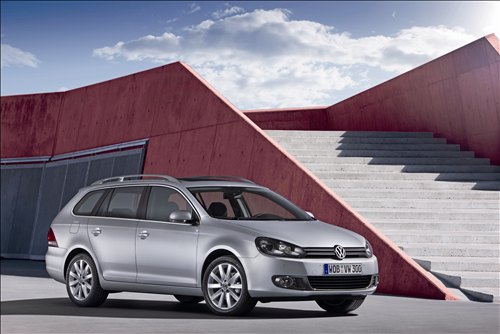
2010 Volkswagen Golf Variant
 2010 Volkswagen Golf Pictures
2010 Volkswagen Golf VI GTI
 2010 Volkswagen Golf Pictures
2010 Volkswagen Golf 2010
 2010 Volkswagen Golf Pictures
2010 Volkswagen Golf Front
 2010 Volkswagen Golf Pictures
2010 Volkswagen Golf GTI MK VI
 2010 Volkswagen Golf Pictures
2009 New York: 2010 Volkswagen
 2010 Volkswagen Golf Pictures
2010 Volkswagen Golf and Golf
 2010 Volkswagen Golf Pictures
2010 Volkswagen Golf R coming
 2010 Volkswagen Golf Pictures
The 2010 Volkswagen Golf

All Review videos and more of:• Infiniti• Mitsubishi• Aston Martin• Isuzu• Nissan• Audi• Jaguar • Pontiac• Bentley• Jeep• Porsche• BMW• Kia• Rolls Royce• Buick• Lamborghini• Saab• Cadillac• Land Rover• Saturn• Chevrolet• Lexus• Scion• Chrysler• Lincoln• Smart• Dodge• Lotus• Subaru• Ferrari• Maserati• Suzuki• Ford• Maybach• Tesla• GMC• Mazda• Toyota• Honda• Mercedes-Benz• Volkswagen• HUMMER• Mercury• Volvo• Hyundai• MINI.and MORE....

Get paid To Promote at any Location TrafficRevenue