Showing posts with label Porsche. Show all posts

Sunday, 21 November 2010

Porsche GT3 GTurbo 2010

2010 Porsche GT3 GTurbo


Porsche GT3 gturbo pela 9ff 4
Quem pode fazer um Porsche 911 GT3 olhar ainda melhor do que já faz? É fácil: o afinador alemão 9ff . Seu programa GTurbo oferece a possibilidade de extrair um total de 1000 HP de seu GT3 . Essa quantidade impressionante de energia foi possível graças a uma conversão Bi-Turbo. No entanto, se 1000 HP é apenas muito para você, então você tem outras opções para escolher: GTurbo750 9ff - 750 HP, GTurbo850 9ff - 850 HP, 9ff GTurbo1000 - 1000 HP.
O exterior 9ff kit inclui: um avental de frente com construído em indicadores LED, menor saias laterais e uma traseira redesenhada avental, esporte sistema de escape e jantes de liga leve 19 "com cinco raios em desenho duplo modificado. Com isso muitos cavalos sob o capô, o 911 " desempenho de s é mais impressionante, indo de 0 a 60 mph em 3,0 segundos na GTurbo850 e apenas 2,9 segundo na GTurbo1000. 9ff O kit é bom para acelerar de 0 a 300 km / h em 18,7 segundo e 16,5 segundos, respectivamente, enquanto o velocidade máxima sobe para 243 MPH.
UPDATE 2010/11/17: 9ff caiu um vídeo do Porsche GT3 850 GTurbo enquanto corria para enviar uma nova 381 km / h recorde mundial na Autobahn alemã. Eles absolutamente bem-sucedida, mas a melhor parte é, a velocidade superior a 850 GTurbo é ainda maior do que isso! Não é o vídeo mais esteticamente agradável que você já viu, mas tudo que você precisa fazer para apreciá-lo é ver a velocidade do contador no Porsche da colisão, uma vez que acelera rapidamente, chegando a 381 kmh (237 mph).

Friday, 19 November 2010

Porsche Cayenne TITAN EVO 2011

2011 Porsche Cayenne TITAN EVO


Evo titan Porsche Cayenne por speedart
Vimos um monte de pacotes de ajuste para a nova geração da Porsche Cayenne , incluindo os da Lumma Design , TechArt , CarGraphic e Design Je, mas este pacote tuning novo SpeedArt pode simplesmente pegar o bolo. É o chamado Evo Titan e fornece o SUV de luxo, com atualizações de interiores e exteriores, bem como um motor mexido. A melhor parte sobre este pacote é que ele pode ser aplicado a todos os modelos da linha Cayenne, algo que nenhum dos outros sintonizadores prestados.
As modificações exteriores e interior podem ser mínimos, mas são suficientes para personalizar o Cayenne em algo mais do que o padrão. O exterior recebe otimizada de montagem de peças para a frente ea traseira saias, saias laterais largos e, claro, 23 "rodas forjadas. O interior foi animada com esportivo de fibra de carbono únicos assentos tipo concha e cores especiais interior.
E, assim como quando você está comendo um bolo e salvar a mordida com mais gelo para o passado, nós deixamos as atualizações do motor para o último. A versão a diesel do Cayenne ganha um adicionou 50 HP e 70 Nm de torque, enquanto o modelo híbrido obtém sua potência aumentou de 70 HP e 50 Nm de torque. A versão Turbo recebe o maior salto, com um aumento de 100 cv e 150 Nm de binário. Todos os modelos também irá receber um esporte sistema de exaustão com controle do interruptor de som e 2x100 milímetros escapamentos duplos e um módulo eletrônico rebaixamento.
Não importa como você corta, o Evo Titan criado por SpeedArt é definitivamente o pacote mais deliciosas que já vimos para a PorscheCayenne
Comunicado de imprensa depois do salto.

Comunicado de imprensa
Como destaque deste ano Essen Motor Show, o Porsche Tuner speedART de Rutesheim perto de Stuttgart / Alemanha apresenta o chamado speedHYBRID como 450 TITAN-EVO conclusão baseado no Cayenne S Hybrid (respectivamente como TITAN EVO 600 com base em Cayenne Turbo). Aqui está um resumo das medidas de ajuste speedART:

Desempenho: 
Para o programa de Mecanismo de Caiena speedART 958 fornece as atualizações de desempenho a seguir:
Diesel: 50 HP / 70 NM
Híbrido: 70 HP / 50 NM
Turbo: até 100 HP / 150Nm
Especialmente para o motor V6 da compressor Cayenne S Hybrid speedART desenvolveu um aumento de potência de 450 HP. Assim, o speedHYBRID 450 supera consideravelmente o poder da série Cayenne S. O sprint dos 0-100 km / h reduz de 6,5 seg. para 5,9 seg. eo V-Max. aumenta em 10 kmh a 252 km / h, por isso mesmo outclasses o V6 padrão por mais de 20 km / h.
O Cayenne Turbo é seletivamente disponíveis com 550, 570 ou 600 HP. Os ganhos Turbo-Diesel um aumento de potência de 50 HP e 640 Nm de torque mais impressionante.

Carroçaria:
Como speedART inovação adicional mundo apresenta dois novos kits de corpo que pode ser adicionado a todas as séries Cayenne 958. Este assim chamado kit TITAN-EVO aerodinâmica otimizada consiste em peças de montagem para a saia dianteira e traseira que faz com que pareça muito mais alegre. O pára-choque seletivamente cumulativa gama flates em conjunto com o lado de saias largas deixar este Porsche aparecer como um SUV robusto imponente que ostenta / mostra sua força.

Som:
speedART fornece um esporte sistema de exaustão com controle do interruptor de som e 2x100 milímetros escapamentos duplos. Assim speedART pode conseguir esse som muito alegre e, além disso acusticamente sua ênfase aumentar o poder. Para a versão Diesel, também temos um esporte sistema de escape sem a opção de som com um som forte SONOR disponíveis.

Rodas:
Como outro destaque em todo o mundo e apresentada pela primeira vez, speedART desenvolvido e projetado a 23 rodas ", que é chamado CTS-forjado.Este forjados e com peso otimizado uma peça aparafusada rodado está disponível no tamanho 11 x 23 "com 315/25 ZR 23" pneus. Por causa de um método especial de forjamento, tornamos possível que o peso do CTS-rodas é menor, então o peso de um elenco de 21 "rodas, apesar de seu impressionante tamanho de 23". Isso significa que não há consumo extra ou losings conforto por causa das rodas maiores.
Suspensão:
Para carros com suspensão a ar, oferecemos um módulo eletrônico baixar e para carros com suspensão convencional, pode encomendar o desporto redução nascentes e também coil-overs.

Interior:
No intervalo da criação interior quase todos os desejos do cliente é possível.Por exemplo, o carro será mostrado justo esportivo de fibra de carbono com um único assento tipo concha e cores especiais interior. Como uma inovação muito especial e pela primeira vez a nova TITAN-EVO será visto com assentos traseiros, sistema de entretenimento com IPAD e iPhone docking station.

Friday, 8 October 2010

TechArt Teases New 2011 Porsche Cayenne Magnum


Having sold more than 1,000 units of its first-generation Porsche Cayenne Magnum models, it's only natural for German tuning house TechArt to develop a successor based on the freshly launched second-generation Cayenne. Teased here for the first time, TechArt's new Magnum program for the 2011 Cayenne will be given its world premiere at the Auto Zurich Car Show in Switzerland, which runs from November 11 to 14.

The tuning program will include a full body kit with a new front bumper that includes LED daytime running lights and additional xenon units, a carbon fiber hood, rear apron, side skirts, wider fenders and a roof spoiler. The sport exhaust tail pipes and newly designed alloy wheels in sizes between 20- and 23-inches will complete the exterior package.

For the interior, TechArt will offer customers a variety of options ranging from bespoke leather upholstery and unique three-spoke steering wheels to roof-mounted entertainment kit.

The aftermarket tuner is also preparing a host of performance enhancements with engine kits plus suspension and braking system upgrades. Specific details will be released after the presentation of TechArt's Magnum program at the Swiss auto show.


Sunday, 6 June 2010

Porsche Cayman Awards

The Cayman has been the recipient of a number of awards, including:

* Automobile – All-Star 2007, Best Sports Car 2006
* Car and Driver – One of the 10 Best Cars 2007-2009
* World Car of the Year (WCOTY) – World Performance Car of the Year 2006
* Top Gear – Sports Car of the Year 2005
* Auto Express - Greatest Drives & Best Sporting Car 2007 & 2006
* Frankfurt Motor Show - Autoweek Editors' Best in Show 2005
* Playboy Magazine - Car of the Year 2006
* J.D. Power’s Initial Quality Study, Best Compact Premium Sporty Cars 2006
* J.D. Power's Automotive Performance, Execution and Layout Study, Best Compact Premium Sporty Cars 2007 & 2006
* Wheels Automotive Design Awards, Best Exterior 2006
* Car Plus Magazine Car of the Year Award, Best Sports Car 2006
* Motor Trend, Best Driver's Car 2009


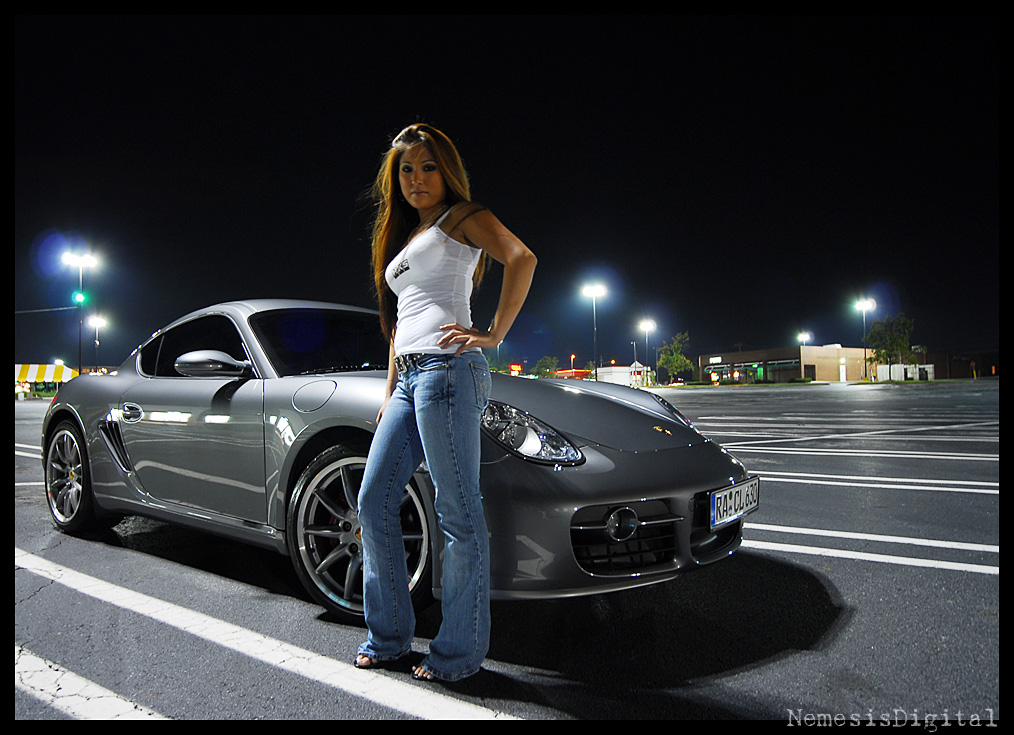
Porsche Cayman
Porsche Cayman

Porsche Cayman
Porsche Cayman

Porsche Cayman
Porsche Cayman

Porsche Cayman
Porsche Cayman

Porsche Cayman
Porsche Cayman

Porsche Cayman
Porsche Cayman

Porsche Cayman
Porsche Cayman

Porsche Cayman
Porsche Cayman

Porsche Cayman
Porsche Cayman


Porsche Cayman
Porsche Cayman

Porsche Cayman
Porsche Cayman

Porsche Cayman
Porsche Cayman


Porsche Cayman
Porsche Cayman


All Review videos and more of:• Infiniti• Mitsubishi• Aston Martin• Isuzu• Nissan• Audi• Jaguar • Pontiac• Bentley• Jeep• Porsche• BMW• Kia• Rolls Royce• Buick• Lamborghini• Saab• Cadillac• Land Rover• Saturn• Chevrolet• Lexus• Scion• Chrysler• Lincoln• Smart• Dodge• Lotus• Subaru• Ferrari• Maserati• Suzuki• Ford• Maybach• Tesla• GMC• Mazda• Toyota• Honda• Mercedes-Benz• Volkswagen• HUMMER• Mercury• Volvo• Hyundai• MINI.and MORE....

Friday, 28 May 2010

2010 New Porsche Sports Cars 911 GT3 at The Geneva

Stuttgart. Dr. Ing. h.c. F. Porsche AG, Stuttgart, is adding yet another new model to the second generation of the 911 model series: the new GT3 even more powerful, faster, and refined than its predecessor. In developing the most sporting and dynamic road-going 911 with a normal-aspiration power unit, Porsche has applied a wide range of know-how gained in motorsport. Indeed, this is precisely why the 2010 new Porsche 911 GT3 is truly impressive not only on the road, but also on the race track.
2010 Porsche Sports Cars 911 GT3
The 2010 new Porsche 911 GT3 is the latest evolution of an iconic sports car. Embodying the essence of more than 23,000 Porsche racing victories, the 911 GT3 is the ultimate integration of driver and car and arrives in the UK this autumn. The new 911 GT3 is making its world debut at the Geneva Motor Show on 3 March, with Europe-wide sales starting in May.
The Porsche 911 GT3 offers an even higher standard above all in two key areas: performance and driving dynamics. The proven six-cylinder naturally aspirated power unit now develops a maximum output of 435 hp (320 kW), up 20 hp over its predecessor. This results first and foremost from an increase in engine capacity by 200 cc to 3.8-litres and from improved cylinder head gas flow: now not only the intake, but for the first time also the exhaust camshafts, are adjusted by VarioCam.
A further important point is that, through its upgraded power and performance, the flat six 'boxer' engine also offers a significant increase in torque at medium engine speeds, a benefit of particular significance in everyday motoring. Clearly, this also means a further improvement in performance; the new Porsche 911 GT3 accelerates from a standstill to 62 mph (100 km/h) in 4.1 seconds and reaches 99 mph (160 km/h) in 8.2 seconds. Top speed is 194 mph.
The second emphasis in developing the Porsche 911 GT3 to an even higher standard was to further improve the car's driving dynamics. For the first time, the Porsche 911 GT3 comes with a particularly sporting variant of Porsche Stability Management (PSM), offering the facility to deactivate both Stability Control (SC) and Traction Control (TC) in separate steps. And to give the driver unrestricted, individual control over the driving dynamics of his car, these functions are not reactivated automatically even under the most extreme driving conditions, but only at the touch of a button.
The Porsche Active Suspension Management (PASM) fitted to the 911 GT3 has enabled Porsche engineers to make the springs and anti-roll bars stiffer yet again, thus ensuring even more precise handling in the PASM 'sports' mode. However, the PASM ensures appropriate ride comfort suitable for everyday use when in the 'normal' PASM mode. The Porsche 911 GT3 rides on new, lighter wheels in a racing-inspired design - with a centre locking nut - fitted with ultra-high performance (UHP) tyres. Tyre pressure monitoring is fitted as standard.
Making the car even more suitable for the race track, the new Porsche 911 GT3 will be available with the option of new and highly innovative Porsche Active Drivetrain Mount (PADM) engine mountings. These special engine mounts recognise a particularly sporting, race-like style of driving, making the normally 'elastic' engine mounts harder and particularly resistant. This retains all the motoring comfort of the GT3 in everyday traffic, while on the race track the effect of the mass forces coming from the engine is much reduced, particularly in fast bends and on winding tracks. Yet a further advantage is improved traction when accelerating from a standstill.
Another new feature is the optional lift system for the front axle which is able to increase the ground clearance of the car, at the touch of a button, for driving on bumpy surfaces or steep gradients - for example into an underground garage - by 30 millimetres (approx 1.2 inches).
The Euro base price of the new GT3 is Euro 98,100, in Germany the retail price including value-added tax and specific national features is Euro 116,947. In the USA the GT3 will be at the dealership in October at a price of USD 112,200 (MSRP without taxes).

Thursday, 27 May 2010

2010 Porsche Sports Cars 911 GT3 R Hybrid

Known as the 2010 Porsche 911 GT3 R Hybrid, the model hints at new hybrid technology that Porsche Sports Cars will use in its motorsport ventures. According to Porsche, the 911 GT3 R Hybrid will be used as a study to gather information about how hybrid drive will behave under a racing environment and will also help the German automaker study how it can be applied to its road cars.
2010 Porsche 911 GT3 R Hybrid
During Porsche's press conference here at the Geneva Motor Show, most of our attention was understandably on the 918 Spyder Concept, but the German automaker had several other significant debuts. One was the 911 GT3 R Hybrid, Porsche's first race car to feature electric power sourced from a duo of motors that send power to a generator attached the flywheel. Like many hybrid production cars, the motors are charged whenever the brakes are applied, and the driver can use the extra power for 6-8 seconds for overtaking.
Exactly 110 years after Ferdinand Porsche developed the world's first car with hybrid drive, the Lohner Porsche Semper Vivus, Dr. Ing. h.c. F. Porsche AG, Stuttgart, is once again taking up this visionary drive concept in production-based GT racing: During the Geneva Motor Show, a Porsche Sports Cars 911 GT3 R with innovative hybrid drive is making its debut, opening up a new chapter in the history of Porsche with more than 20,000 wins in 45 years scored by the extremely successful Porsche 911 in racing trim.
Unlike a conventional battery-electric hybrid system the Porsche 911 GT3 R uses a flywheel system, which gathers kinetic energy under braking to power two electric-motors that are mounted in a single assembly and are connected to the front wheel. After each boost of charge, the two motors provide 6 to 8 second jolts of power. The extra power is engaged by pressing a button on the steering wheel, providing up to 161-hp to the front wheels, assisting the 911 GT3 R Hybrid’s 480-hp 4.0L inline-6 that powers the two rear-wheels.
The innovative hybrid technology featured in the car has been developed especially for racing, standing out significantly in its configuration and components from conventional hybrid systems. In this case, electrical front axle drive with two electric motors developing 60 kW each supplements the 480-bhp four-litre flat-six at the rear of the 911 GT3 R Hybrid. A further significant point is that instead of the usual batteries in a hybrid road car, an electrical flywheel power generator fitted in the interior next to the driver delivers energy to the electric motors.
The flywheel generator itself is an electric motor with its rotor spinning at speeds of up to 40,000 rpm, storing energy mechanically as rotation energy. The flywheel generator is charged whenever the driver applies the brakes, with the two electric motors reversing their function on the front axle and acting themselves as generators. Then, whenever necessary, that is when accelerating out of a bend or when overtaking, the driver is able to call up extra energy from the charged flywheel generator, the flywheel being slowed down electromagnetically in the generator mode and thus supplying up to 120 kW to the two electric motors at the front from its kinetic energy.
This additional power is available to the driver after each charge process for approximately 6 - 8 seconds. Energy formerly converted - and thus wasted - into heat upon every application of the brakes, is now highly efficiently converted into additional drive power.
Depending on racing conditions, hybrid drive is used in this case not only for extra power, but also to save fuel. This again increases the efficiency and, accordingly, the performance of the 911 GT3 R Hybrid, for example by reducing the weight of the tank or making pitstops less frequent.
After its debut in Geneva the 911 GT3 R Hybrid will be tested in long-distance races on the Nürburgring. The highlight of this test programme will be the 24 Hours on the Nordschleife of Nürburgring on May 15th and 16th. The focus is not on the 911 GT3 R Hybrid winning the race, but rather serving as a spearhead in technology and a 'racing laboratory' providing know-how on the subsequent use of hybrid technology in road-going sports cars.
The 911 GT3 R Hybrid is a perfect example of the Porsche Intelligent Performance philosophy, a principle to be found in every Porsche: More power on less fuel, more efficiency and lower CO2 emissions - on the track and on the road.

Wednesday, 26 May 2010

2010 New Porsche Sports Cars 911 GT3 R

Porsche has unveiled the 2010 new Porsche 911 GT3 R. The 911 GT3 R will be raced in series based on the international FIA GT3 regulations, thus succeeding the 911 GT3 Cup S. The 911 GT3 R is powered by a four-litre six-cylinder boxer engine delivering maximum output of 480 bhp (353 kW) transmitted to the rear axle by a sequential six-speed dog gearbox.
2010 New Porsche Sports Cars 911 GT3 R
The GT3 R offers 30 bhp more than the Porsche 911 GT3 Cup model. Both cars are based on the extra-wide body of the 911 GT3 RS street-legal sports car.
Porsche AG continues to work deep into the 2010 competition season. The new Porsche 911 GT3 R replaces the 911 GT3 Cup S in the range of competing models of the brand. The 911 GT3 R participate in the tests based on international regulations FIA GT3. A sequential gearbox six-speed is responsible for transmitting that power to the rear axle.
It is based on the Porsche 911 GT3 Cup, presented in September 2009, and intended to compete in single-brand glass. With the increase in displacement at 0.2 liters, the GT3 R achieves 30 hp increase in power compared to GT3 Cup racing Both vehicles take the widened bodywork of the 911 GT3 RS series.
The antilock brake system (ABS), traction control and electronic throttle prepared to adapt the engine speed in each gear change, making it much easier driving in relation to its predecessor, so this new model will also most appropriate for amateur drivers.
The Porsche 911 GT3 R weighs 1,200 kg, comes with an anti-lock brake system (ABS), traction control and an e-gas with “throttle-blip” function make it much easier to get used to this new GT3 racing car than its predecessor, meaning that the new model is also more appropriate for the ambitious amateur racing driver.
The flared wheel arches, both in the front and the rear channels show a higher compared with the previous model. The underside of the vehicle are fully lined and features a rear diffuser. The possibilities of regulating the rear wing have also been increased. The race suspension has several settings.
Front, McPherson has a structure adjustable in height, with SACHS shock variables and two-way dual dock. Behind, the GT3 R has a highly rigid sub-frame, with a multilink axle adjustable height and the Sachs shock absorber adjustable two-way dual dock.
The Porsche 911 GT3 R is making its world debut on 14 January 2010 at the Birmingham Motor Show and the price is 279,000 Euros.

Get paid To Promote at any Location TrafficRevenue